Health and Safety
When filming health and safety is key in creating a safe and efficient working environment, not only can accidents caused by poor health and safety be life-threatening but also hinder production and can lead to lawsuits. The senior staff is usually held responsible for any accidents so it will usually be them that insist on a strict health and safety rules however everyone on set should set out to make the workspace safe, "The line of responsibility runs from the Producer to the Production Manager and 1st Assistant Director and finally on to all crew members who have a duty of care which is recognized by law. If someone can see the potential for an accident and does nothing to try to prevent it, they can be held responsible in some way, probably along with their senior colleagues." (Moving Image Education 2019).
"'Hazard' refers to the potential for harm. while 'Risk' is the chance of that harm actually happening. Though some hazards might seem very obvious, people might still need to have them pointed out." (Moving Image Education2019). When first setting up a filming set, whether a static location (like a studio) or a portable one (like an outdoor shooting location) it is important to run a 3 step risk assessment: Identifying all risks, evaluate the risks, and then controlling the risk. Recording this process will make it clearer for your members of staff to identify risks and to understand the set in place procedure on how to avoid them. Onset communication is key to avoiding injury, weather its to tell a crew member of a group of wires on the floor or to tell them of a damaged piece of set that could cause harm.
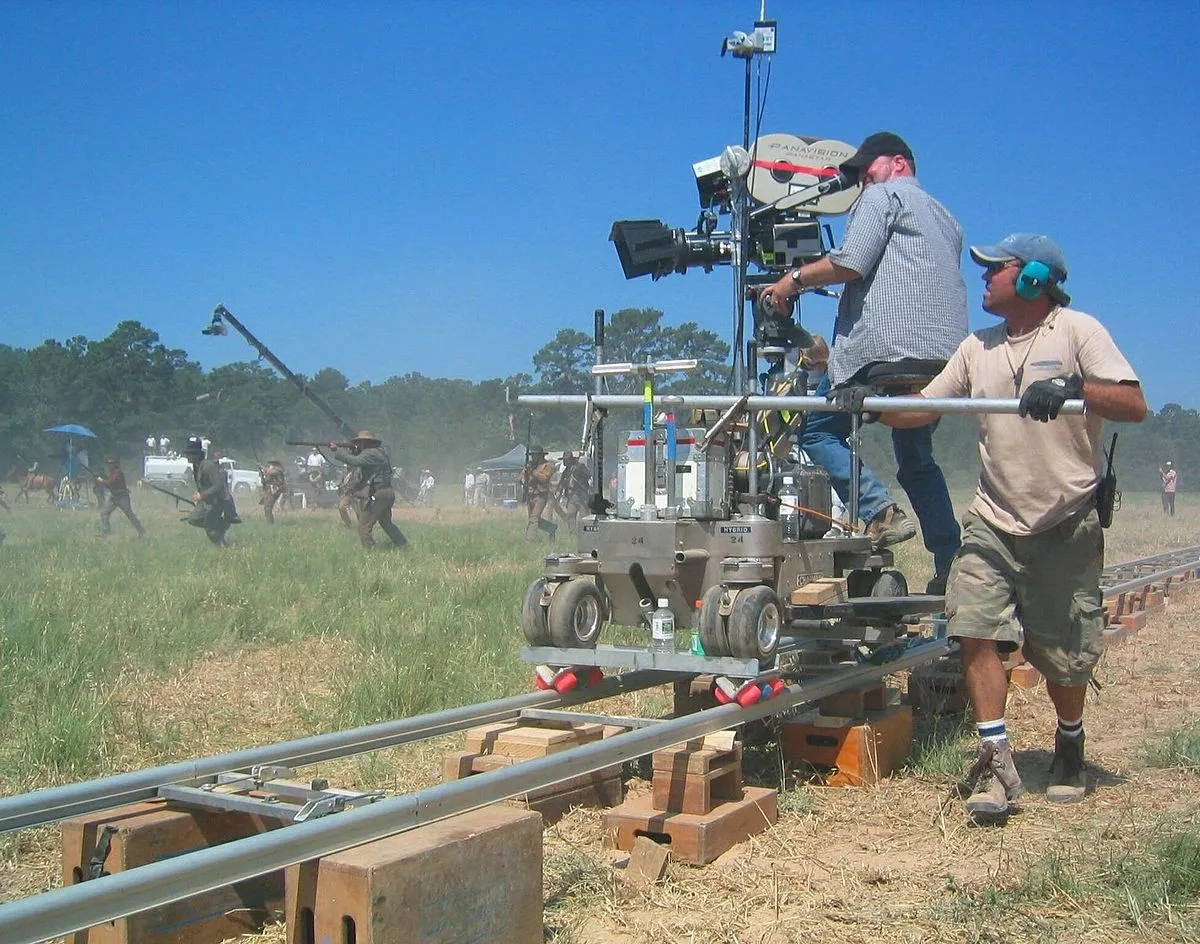
Dolly Track in use. (Jason Hellerman 2019)
Some examples of common hazards that can occur on set are: tripping hazards, lifting hazards, and working from extreme heights. Another key risk that is common on film sets is moving camera shots where a cameraman is moving with the camera, during this process the cameraman could trip as they wouldn't be looking where they are going and could cause serious damage to themselves and the equipment, "When a camera operator or cast member is walking during a shot, make sure they are comfortable with their route and there is nothing that could cause problems (a camera operator who needs to walk backward for a shot should have an assistant to guide them and/or check their route)" (Moving Image Education 2019). An example of a way this could be avoided or at least on how to reduce the risk of this is through a dolly track, this track will allow the camera to move in these shots without risk of the cameraman hurting themselves, setting up a clear track that the camera can move on smoothly without bumping into anything/anyone.
Reference List
Moving Image Education ., (2019) Health and Safety [Online]
Available from:
https://movingimageeducation.org/create-films/production/the-production-department/health-and-safety
Jason Hellerman .,(2019) What is a dolly shot [Online]
Available from:
https://nofilmschool.com/what-is-a-dolly-shot
Brief
For my short film I will be implementing elements of New Wave Cinema using the knowledge I have learnt so far while also researching new techniques. I will take a lot of techniques from American, French and British New Wave. My new wave film will be based on the contrasting differences between nature and mankind with the short film cutting between shots of industrialisation and busy man made areas like main roads or retail, while also cutting back to the quieter shots of wildlife and nature. Some elements of new wave films that will be in my short film will be incoherent editing, with shots being cut at random times or times that would disrupt the natural flow of shot before, for example, if i have a shot of a deer running it might be interrupted mid shot with another of a busy road. "Non-linear and fragmented editing became another major and exciting contribution. For decades, each Shot A led logically into Shot B, leaving no gaps in the information to keep the audience from being confused. Now, in these French films, logic became a secondary concern. "Alyssa Maio(2015). Another element of new wave cinema that i will include into my short film will be these of a hand held camera and the lack of a tripod, throughout most of my film i won't be using a tripod to film as i am going to have to be moving around a lot, this will mimic a lot of French new wave films that incorporated this technique into their production. "The smaller, lightweight cameras were often "freed" from the tripod and handheld, giving a new life and energy to their films." Alyssa Maio(2015).
The Parallels of Nature
Evaluation
During the production process of this film I struggled to get out and shoot footage of busy life so I improvised and used footage that was easier to gather around the college area. In keeping in line with the new wave theme I incorporated many techniques such as the shaky hand held camera, This was used as i was constantly on the move when filming the wildlife and i decided not to use a warp stabiliser as to keep the new wave element of the technique. The film shows the parallels between the animal world and human world with shots mimicking each other as i have one shot of people running then it cuts to a shot of the animals running. Reference
Alyssa Maio.,(2015) What is French New Wave? Background and Revolutionary Techniques[Online]
In this short film we were tasked with making a short film exploring a different perspective of what would normally be seen, in knowing this I based my film around a persons day to day life of going and sitting at a bench, when shooting this I decided to follow the protagonist throughout the film using different angles and distances that could be considered unique for this sort of movement, such as extremely long shots from a weird angle or close up shots of the protagonists feet while walking. In editing this short film I learned how to create "bins" in premiere pro and learnt the importance of renaming and organising clips as it makes the editing process a lot simpler, especially if you are coming back and continuing with the edit at a later date, helping you know what shots are what and whether the clip is particularly useful or not.
Wii Music Short Film (Illusions)
For this short film we were tasked with creating a short film that involved visual illusions with the camera. With this in mind we set out to use jump cuts and a stiff camera position to create the illusion of teleportation, we did this to the Wii music to help set a pace and create a light hearted feel to the film. In doing this I learnt how to closely edit a set of clips to help match the audio it is going with while making sure everything seemed coherent.
About You
In this 4 hour editing task we had to edit clips we had found online to a song set to us at the start of the task, in doing this we had to find clips that matched the setting and pace of the music video and made sure we edited them inline with the music, making sure that what we saw in the clips matched the pace and beat of the music. Throughout this task I improved upon my previously mentioned skills of editing clips to help match an piece of music making sure both fit well together and the final piece seems coherent.
ISO
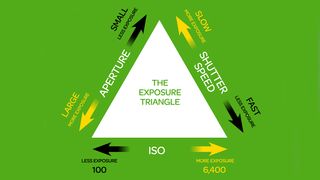
The ISO is responsible for how much light is allowed to enter the camera. Unlike the aperture and shutter speed it is nearly always desirable to have the lowest ISO possible to reduce the noise within the photo. The standard ISO settings for use within the camera are anything between 100(or the lowest possible) - 800, this allows for a good ratio between lighting and noise. "Similar to shutter speed, it also correlates 1:1 with how much the exposure increases or decreases."(CambridgeInColour, 2019)
To experiment with the different levels of ISO and the noise it creates in my videos I shot short clips throughout day and night with different ISO levels.
Aperture
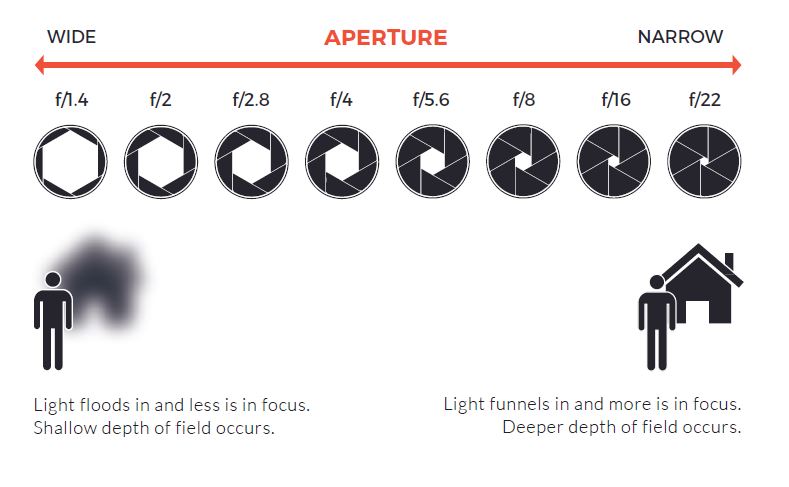
The Aperture controls how much lighting is allowed into the lens. This is controlled under an F-stop value with more light being allowed into the lens, the F-stop value will decrease respectively. Every time the F-stop value halves, the lighting area quadruples.
A camera's lower F-stop value correlates with a shallower depth of field witch determines what in the shot is in focus whether if its just a face or a full background.
Shutter speed
Shutter speed determines the time each frame is exposed to light with higher the shutter speed, the more light that will be allowed into the photo, where a faster shutter speed means a shorter exposure time to light, therefore creating a darker photo. The shutter speed and lighting correlates at a 1:1 ratio, for example when the exposure time doubles, the lighting in the shot will double.
Shutter speed can be used to freeze or exaggerate the appearance of motion through using a lower shutter speed to create a motion blur or either using a higher speed to freeze the shot and remove all elements of movement. In order to create a sharper image with no motion blur a tripod is recommended to remove all extra movement and therefore creating a smoother shot.
When choosing a shutter speed it should typically be doubled to the frame rate, an example being if you are filming at 24 frames per second, then the recommended shutter speed would be 1/50. Using a lower shutter speed will create a motion blur as i previously mentioned, while the higher the shutter speed the more crisp the video will be. In the examples below i have experimented with using low, normal and high shutter speed for my frame rate (which is 24fps) to show the effect this has an a video and the amount of motion blur that will occur.
Frame rate
Movies are usually displayed at 24fps, since this frame rate is similar to how we see the world, and creates a very cinematic look. Video games or sports events will often have a higher frame rate, as there’s a lot happening at once and a higher frame rate keeps the motion smooth. To get the highest quality video the shutter speed should correlate at around double the FPS.
Pull Focus
at this point I also learned how to use a pull focus effect. I will be able use this technique in short films.
Source List
CambridgeInColour, 2019 [Online]
Available from:
https://www.cambridgeincolour.com/tutorials/camera-exposure.htm
Lighting Techniques
Lighting can affect the camera techniques used throughout moving image, for example using light sources from the front or back of the shots helps in leaving areas of darkness between illumination by the backlight and can create shadows on actors faces such as in the movie schindlers list.
A small documentary would require an easily portable camera and microphone as well as enough portable lighting and spare memory cards. this will be because of the portability of the project a lot of equipment will not be needed but spares on battery's and memory space is paramount as the film makers will be on the move and wont have time to recharge often.
A talking head style interview would require a professional looking background/backdrop for your filming location, plenty of lighting to keep the person talking well lit and in focus and a tripod to keep the camera steady during long takes.
A night shoot could require the filmmaker to bring an excess amount of lighting and maybe reflectors in order to properly light the entire shot or at least what they want lit in the shot, However in doing this it will give your shots a colour cast. "Colour cast is an unwanted color shift in the whole image, which can be caused by reflected light from a nearby object. For example, many photos taken using flourescent lighting tend to have a greenish color cast." (Adobe Help, 2019). Colour casting can usually be edited out in post production to help reflect the natural lighting of a shot.
Before and after colour casting was removed during the post production phase (Adobe Help, 2019).
Rembrant Lighting
Rembrant lighting is a common lighting effect used in photoshoots due to its lack of equipment and professional looking finish, it is particularly used for portrait photoshoots. Rembrant lighting includes one half of the models face in full lighting while the side furthest away from the camera is typically in a light shadow, rembrant lighting usually includes a triangle of light around the shadows sides eye, the size of this triangle determines how perfect the rembrant lighting is, "To be a true Rembrandt lighting setup, the triangle of illuminated light should be no wider than the eye, and no longer than the nose." (Improve Photography, 2019)
Edge Lighting
For edge lighting you will only need a light with a stand or tripod to keep it still. Edge lighting blacks out the model during the shoot creating only a light rim around their figure, this is created by placing the flash behind the model facing at them. In doing this the flash will trigger during the photo creating the rim effect.
Butterfly lighting
Butterfly lighting is created when the lighting is placed dead centre to the models face. in doing this the full face of the model will be light creating a little butterfly shape shadow under the nose, but leaving the rest of the face fully lit.
High Key Lighting
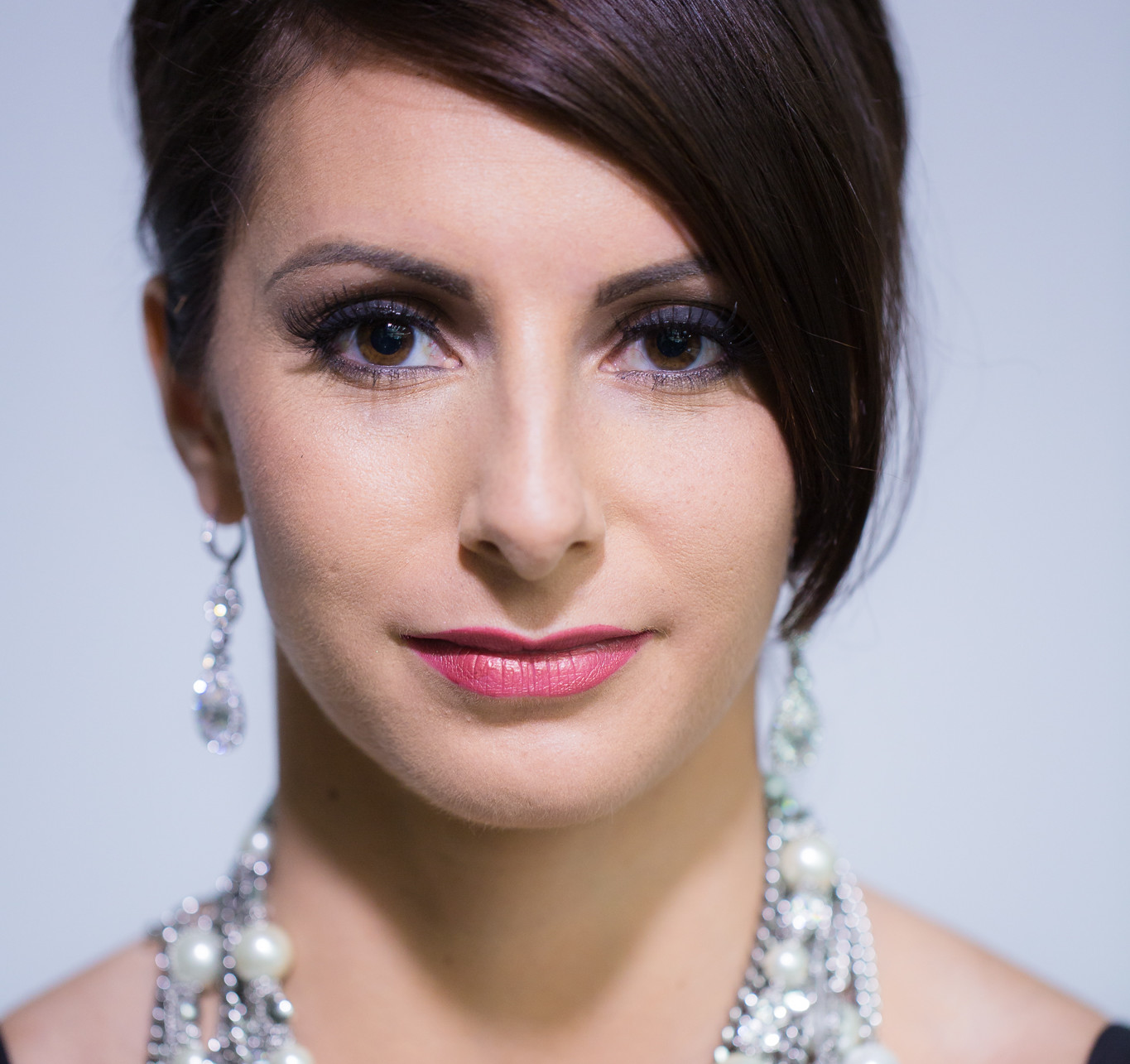
High key lighting is created using large lights opposite the model just like in butterfly lighting and is used to connote positive feelings "High key lighting is a method often used in beauty and makeup commercials and in comedies. A high key look gives you fewer shadows and makes your talent look flawless and elegant. It produces an even amount of light that spreads across an entire scene. It’s also useful for producing food or product imagery when you need the light to be even across the entire scene."(Tanner Shinnick, 2019)
Low Key Lighting
Low key lighting is used within moving image in a darker way, typically being seen in horror films. To create the low key effect a single light is used that is typically located close to the model. This creates contrasting between the model and the dark background.
Source List
Adobe Help (2019) [Online]
Available from:
https://helpx.adobe.com/photoshop-elements/key-concepts/color-cast.html
Improve Photography, (2019) [Online]
Available from:
https://improvephotography.com/19250/rembrandt-lighting-awesome/
Tanner Shinnick ., (2019) What You Need to Know About High Key vs. Low Key Lighting [Online]
Available from:
https://www.premiumbeat.com/blog/high-key-vs-low-key-lighting/